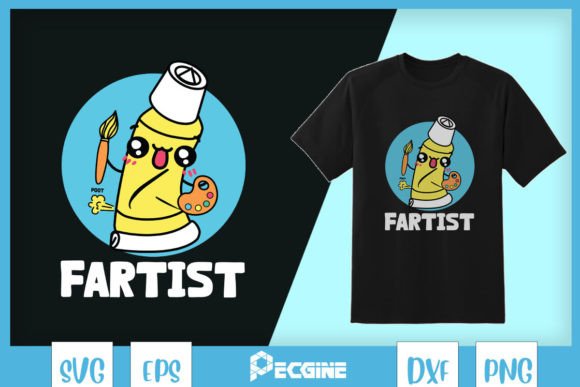
Fartist Artist Pun SVG: Graphics for Crafts & Creative Brands
As a brand designer who’s helped over 200 small businesses refine their visual voice—and as a content marketer who’s shipped hundreds of high-performing social campaigns—I opened Fartist Artist Pun SVG expecting playful irreverence. What I found was sharper: a tightly crafted, tonally confident graphic design asset that lands somewhere between witty editorial illustration and bold lifestyle branding. It doesn’t scream “joke”—it smiles with intention. That nuance matters deeply when you’re building audience trust through consistent, professional branding.
First Impression: Playful, Not Precarious
The moment you drop Fartist Artist Pun SVG into a mockup—say, a Pinterest pin for an art supply shop or a limited-edition sticker sheet—it establishes immediate warmth and approachability. The line work is clean, the proportions balanced, and the pun lands with visual rhythm—not clutter. It feels handmade but not amateurish; clever but not cryptic. For brands rooted in creativity—online coaches teaching digital illustration, indie stationery makers, or craft subscription boxes—this asset signals authenticity without sacrificing polish. It leans into casual branding and lifestyle content naturally, but it’s too refined for low-effort meme culture and too personality-driven for premium minimalism.
Real Campaign Fit: From Launch Kit to Content Bundle
Last month, I used Fartist Artist Pun SVG in a real product launch for a small-batch watercolor brand refreshing its summer campaign. We embedded it into three key touchpoints: a Canva template pack for email subscribers (as a decorative header accent), Instagram Story stickers for behind-the-scenes studio reels, and a printable promo insert tucked inside packaging. In each case, it elevated visual hierarchy—not by dominating, but by anchoring tone. Unlike generic clipart, this SVG design carries narrative weight. It supported stronger first impressions across channels and reinforced brand recognition without needing explanation.
Where It Shines in Marketing & Branding
- Brand identity: Works beautifully as a secondary mark or pattern element—especially when paired with a strong sans serif font or subtle script accent.
- Social media graphics: Stands out in crowded feeds without competing with text; ideal for Instagram posts, Pinterest pins, and Facebook ads targeting creative entrepreneurs.
- Digital product visuals: Adds character to Canva templates, lead magnets, and media kits—making downloadable resources feel more human and less templated.
- Printable design & packaging: The transparent-background PNG scaled flawlessly on kraft paper labels and die-cut stickers; the EPS held crisp detail for foil-stamped inserts.
- Editorial design: Used as a recurring motif in a blog series about creative entrepreneurship—creating continuity across long-form content.
Marketing Goals It Actively Supports
Fartist Artist Pun SVG isn’t just decoration—it’s strategic visual shorthand. It strengthens audience trust by signaling brand confidence and wit. It improves engagement because it invites pause and recognition—not just scrolling. It boosts memorability in saturated digital spaces where generic stock graphics fade instantly. And crucially, it supports small business branding by delivering professional-grade design assets without custom illustration fees. When layered into a content kit or digital product, it helps transform functional deliverables into emotionally resonant experiences.
Best Use Cases for Maximum Impact
- Hero graphics for landing pages promoting creative courses or toolkits
- Campaign headers for seasonal offers (e.g., “Summer Sketch Challenge”)
- Branded templates for Canva users—especially those targeting designers, bloggers, and educators
- Packaging accents that add charm without overwhelming product focus
- Content bundles like “Social Media Starter Kits” or “Blog Graphic Packs”
- Merchandise-ready elements for stickers, tote bags, and enamel pins
Where to Use It Thoughtfully
This graphic design asset thrives in expressive contexts—but requires discernment. Avoid using Fartist Artist Pun SVG in formal corporate branding, dense infographics, or mobile-first ads where clarity trumps charm. It loses impact at under 48px, so skip tiny app icons or notification badges. Steer clear on low-contrast backgrounds (e.g., light gray text on off-white) unless you’ve tested readability rigorously. And if your brand voice leans toward austere modern design or luxury minimalism, this illustration may dilute visual consistency rather than enhance it.
Brand Designer Notes You Can’t Skip
Before locking it into any live campaign, run these checks: Test how Fartist Artist Pun SVG interacts with your core brand color palette—especially in monochrome. Drop it into real mockups: a Shopify product page, a Mailchimp banner, a Canva social post. Preview on mobile screens at multiple sizes. Compare spacing against competitor visuals—does it feel equally intentional? Try pairing it with serif fonts (for editorial contrast), sans serifs (for clean synergy), and display fonts (for bold campaign energy). Most importantly: verify commercial license terms. This is essential for client work, paid ads, and any digital product you sell—whether as part of a design bundle, printable design, or marketing visuals.
Why It Belongs in Your Creative Marketplace Toolkit
In a landscape flooded with forgettable clipart and overused vectors, Fartist Artist Pun SVG stands out as a rare hybrid: commercially viable yet creatively distinctive. Its included formats—SVG pre-sized for design software, high-res PNG with transparent background, versatile DXF, and scalable EPS—make it adaptable across crafts, web design, print production, and digital ads. Whether you're a solopreneur building your first brand kit or a content marketer scaling visual assets for a team, this asset delivers efficiency *and* emotional resonance. It doesn’t replace strategy—but it makes strategy more visible, more shareable, and more human.