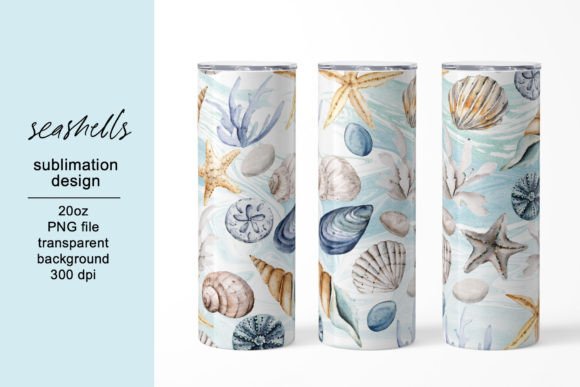
Tumbler Sublimation Design with Shells
First Impressions: A Bright, Beachy Vibe — But Is It Embroidery-Ready?
When I opened Tumbler Sublimation Design with Shells, my first thought wasn’t “perfect for tumblers” — it was “this has real charm for embroidered totes and nursery pillows.” The watercolor clipart style gives soft edges and gentle color transitions — lovely for sublimation, but immediately raises questions for machine embroidery: How will those delicate shell outlines hold up in satin stitch? Will the transparency translate cleanly into a stitch map? I pulled it into my embroidery software and zoomed in. At 9.3 x 8.2 inches, it’s generous — ideal for a full-front sweatshirt or large tote bag design, but too big for most caps or baby onesies without thoughtful scaling.
Where It Shines (and Where It Stumbles) in Real Embroidery Projects
I tested Tumbler Sublimation Design with Shells as the centerpiece for a custom linen tea towel — a common small shop product for craft fairs and Etsy listings. On screen, the bright, airy composition felt joyful and summery. In stitch simulation, the open layout worked well: no dense fill-stitch clusters that could cause puckering on lightweight fabric. The shells are spaced generously, leaving breathing room for running-stitch outlines or subtle applique accents. That spacing is a quiet win — it means fewer thread breaks, smoother hooping, and cleaner results on textured fabrics like terry cloth or canvas.
But here’s where realism kicks in: this isn’t an embroidery file. It’s a PNG with transparent background — a graphics asset, not a digitized machine embroidery design. So while the visual idea is strong, you’ll need to digitize it yourself or hire a digitizer before stitching. That matters especially for small business owners juggling time and cost. For example, turning those soft watercolor edges into clean satin-stitch borders requires careful underlay and tension balancing — something a beginner might underestimate.
A Natural Fit for Handmade Products — With Caveats
This design feels right at home on products where mood and handmade warmth matter more than technical precision: embroidered pillow covers for coastal-themed nurseries, relaxed cotton aprons for boutique cafes, or personalized beach-themed baby blankets. As a digital embroidery file, it would elevate an Etsy listing — customers respond to cohesive, intentional aesthetics, and Tumbler Sublimation Design with Shells delivers that beachy, carefree energy without looking mass-produced.
That said, I wouldn’t use it straight-up for high-wear items like toddler t-shirts or sportswear. Why? The original layout assumes flat, stable sublimation surfaces — not stretchy knit fabric or curved cap fronts. Without reworking the shape and density, stitching it directly onto a baseball cap would likely distort the shell proportions and mute the lightness of the design. Same goes for thin fabrics like rayon challis: without proper stabilizer and reduced stitch density, those open areas could shift or tunnel.
What You Must Check Before Stitching
- Test on scrap fabric first — especially if using it for custom apparel or embroidered patches. Watercolor-style outlines often need tighter stitch angles to read clearly.
- Review thread color contrast — the brightness works on light backgrounds, but on navy or charcoal fabric, some shell details may vanish unless you adjust fill density or add outline stitches.
- Confirm hoop size compatibility — at 9.3 x 8.2 inches, it fits standard 10x6 or larger hoops, but won’t work in compact 4x4 setups without significant simplification.
- Inspect small details — tiny gaps between shells or fine highlights may disappear in stitch. Zoom in digitally and ask: “Will this still read at 80% scale?”
- Use proper stabilizer — especially for woven cotton, linen, or textured kitchen towels. A medium-weight cutaway helps preserve the design’s airy balance.
- Check licensing before selling finished items — since this is a graphics asset sold for Crafts and Graphics use, verify whether commercial embroidery rights are included or require separate permission.
How It Shapes Customer Trust and Brand Voice
For Etsy sellers and small shop owners, design choices quietly signal professionalism. Tumbler Sublimation Design with Shells reads as curated, not generic — which builds trust faster than a cluttered, over-digitized motif. When used thoughtfully (say, as a single embroidered shell cluster on a cream linen tote), it supports brand consistency for makers who lean into coastal, minimalist, or nature-inspired aesthetics. Customers notice when a design feels intentional — not just “added,” but *placed*.
But be honest with yourself: if your shop specializes in bold, graphic embroidery or intricate monogrammed gifts, this may feel too soft or unfocused. It’s not a versatile all-rounder. It’s a mood-setter — best deployed where lightness, texture, and handmade warmth are part of the product story.
A Final Note for Creative Entrepreneurs
Tumbler Sublimation Design with Shells isn’t a plug-and-play embroidery file — and that’s okay. Its value lies in its clarity of intent and visual cohesion. For designers building digital embroidery files, it’s excellent source material. For crafters digitizing for personal projects, it’s a joyful starting point. For small business owners creating printable mockups or holiday gift bundles, it adds instant seasonal appeal.
Just remember: great embroidery starts with smart adaptation — not just copying what’s on screen. Let the watercolor softness guide your stitch choices, not limit them. Scale thoughtfully. Simplify where needed. And always, always test before committing to a client order or craft fair batch. Because in the end, what makes a design truly useful isn’t how it looks in PNG form — it’s how it lives in thread, fabric, and the hands of someone who chose it for a reason.