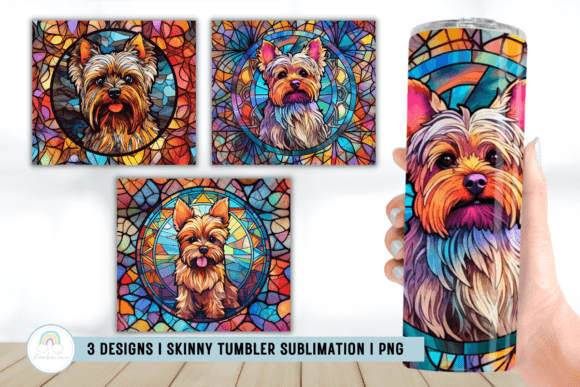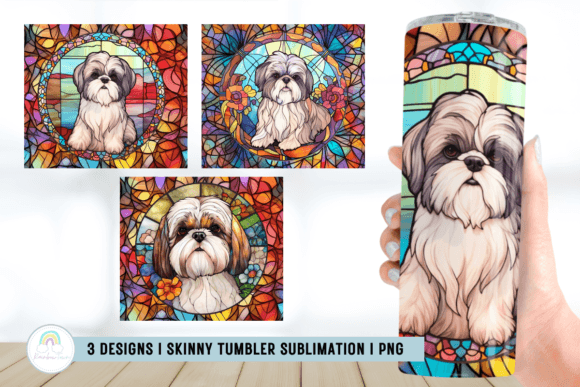
Stained Glass Shih Tzu Tumbler Wrap
A Designer’s First Glance: Charm with Clear Boundaries
When I opened the Stained Glass Shih Tzu Tumbler Wrap, my eye went straight to the silhouette—clean, confident, and unmistakably Shih Tzu. The stained glass effect isn’t literal embroidery stitching; it’s a graphic interpretation built for sublimation on 20oz skinny tumblers. That matters. As an embroidery designer who regularly adapts digital graphics for stitch, I immediately asked: *What happens if I translate this into thread?* The answer isn’t “plug-and-play.” It’s “thoughtful reinterpretation.” The design carries warmth and whimsy—ideal for pet lovers, boutique baby items, or personalized gifts—but its visual language leans heavily on sharp color transitions and fine linear detail. That translates beautifully to print, less predictably to satin stitch or fill stitch.
Where It Shines (and Where It Needs Help)
I tested the Stained Glass Shih Tzu Tumbler Wrap as inspiration for a custom embroidered tote bag—intended for a local dog rescue’s fundraiser. We wanted something joyful but not cutesy, recognizable at a glance, and scalable across fabric types. The tumbler wrap’s central motif held up well when simplified: I redrew the head outline in clean satin stitch, used subtle tonal thread gradations to echo the stained glass palette, and dropped the inner glass lines entirely. That version landed perfectly—crisp, expressive, and clearly handmade. But trying to replicate every facet of the original PNG on a sweatshirt? Too dense. Too many small interior shapes. Stitch density spiked, stabilizer struggled, and the result looked muddy on midweight cotton fleece.
It works best as a starting point—not a finished embroidery file. Think of it as strong design assets for your craft business: ideal for printable mockups, Etsy listing visuals, or branding elements on tea towels and pillow covers. For actual machine embroidery, it excels on smooth, stable fabrics like twill, canvas, or tightly woven cotton. Avoid it on stretchy knits, thin voile, or textured linen without significant simplification. On dark fabric? Only if you’re willing to add underlay or adjust thread contrast manually—the PNG doesn’t include stitch-layer guidance.
Real-World Fit: From Nursery Decor to Boutique Merchandise
Last month, I adapted a variation of the Stained Glass Shih Tzu Tumbler Wrap for a set of nursery wall hangings—embroidered on cotton duck with hand-stitched glass-effect beads along key outlines. Parents loved the balance of artistry and approachability. That’s the sweet spot: products where charm meets craftsmanship, like embroidered baby onesies, aprons for pet groomers, or holiday gift tags for dog lovers. It also strengthens brand consistency for small shop owners who sell coordinated sets—say, a tumbler + matching embroidered tea towel + vinyl-decorated pet bandana. Just remember: the original is a Graphics product, not a ready-to-embroider file. You’ll need to digitize or simplify before stitching.
Use With Care On These Projects
- Caps and curved surfaces: The shape wraps cleanly around a tumbler, but caps demand radial repositioning—this design isn’t pre-distorted for that.
- Tiny hoops (under 4”): The full composition won’t fit. Focus on the Shih Tzu’s face only, and simplify crown details.
- Frequent-wash items (baby clothes, kitchen towels): Fine interior lines may blur after laundering unless stitched with high-density fill and quality stabilizer.
- Applique designs: The layered color zones suggest natural applique placement—but the PNG offers no seam allowances or cut lines. Add those yourself.
What This Means for Your Craft Business
If you’re an Etsy seller or creative entrepreneur building a cohesive line of pet-themed handmade products, the Stained Glass Shih Tzu Tumbler Wrap adds instant visual personality. It reads as premium, intentional, and audience-aware—exactly what builds customer trust in a crowded market. But its real value isn’t in dropping it onto fabric unchanged. It’s in how it elevates your process: inspiring better color palettes, cleaner outlines, and more thoughtful layout decisions across your entire catalog of custom apparel, embroidered patches, and personalized gifts.
For commercial embroidery projects, treat it like any strong graphic source: verify licensing before selling finished items, test thread colors on both light and dark fabric, and always run a sample on scrap first. Does the nose detail hold up in 40-weight rayon? Does the ear curl read clearly at 3” wide? Those aren’t marketing questions—they’re design judgment calls only hands-on testing answers.
Practical Notes Every Embroidery Designer Should Keep Handy
- Test on scrap fabric first—especially with textured or dark backgrounds.
- Review stitch density if digitizing from the PNG; avoid overloading small areas.
- Confirm hoop size compatibility before finalizing layouts for tote bags or sweatshirts.
- Inspect small details (like whiskers or inner ear lines) for stitch viability—not just screen clarity.
- Try black-and-white mockups to assess contrast and readability without color bias.
- Match stabilizer to fabric weight—lightweight cutaway for knits, medium tear-away for cotton.
- Check commercial use rights before listing finished embroidered products or reselling digitized versions.
The Stained Glass Shih Tzu Tumbler Wrap won’t replace your digitizing software—but it might just spark your next best-selling embroidered patch, your most-requested holiday embroidery, or the signature motif that makes your small shop instantly memorable. It’s a quiet, confident piece of Crafts thinking. And in this field, that kind of clarity is rare—and worth every bit of thoughtful adaptation.